With the sixth season of Game of Thrones arriving next Sunday, I thought I'd do this time lapse build.
Considered the ultimate symbol of power in the land of Westeros, the Iron Throne is the seat of kings in the Seven Kingdoms. His Grace, Joffrey of House Baratheon and Lannister, Lord of the Seven Kingdoms, and Protector of the Realm sits with smug satisfaction as he torments over all of his subjects while being protected by an extremely loyal and skilled Kingsguard.
I figured I'd put together these two sets together.
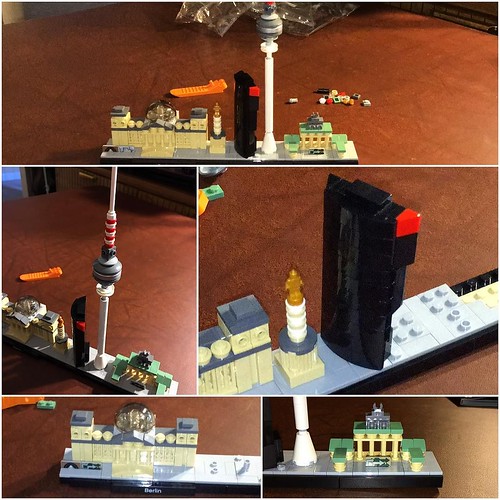
BERLIN
Germany’s capital and cultural center dates back to the 13th century and has shaped – and been shaped by – many dramatic events in European history.
From humble beginnings as a medieval trading center, the city played a key role in the rise of the Kingdom of Prussia and modern Germany.
THE BUILDINGS:
BERLIN TV TOWER
The 1,207 ft. (368 m) tower consists of an 820 ft. (250 m) concrete shaft upon which sits a seven-story sphere, crowned by a 387 ft. (118 m) red and white striped antenna mast. It remains Germany’s tallest structure and a popular destination for almost 1.2 million visitors every year.
DEUTSCHE BAHN TOWER
Architect Helmut Jahn designed the eye-catching 338 ft. (103 m) semi-circular glass and steel tower, which was completed in June 2000. The office is now home to Deutsche Bahn AG, the German national railway company, and is referred to as the BahnTower.
VICTORY COLUMN
Originally erected between 1864 and 1873 to commemorate famous victories in wars against Denmark, Austria and France, the Victory Column (Siegessäule) was extended to its current height of 220 ft. (67 m) during the 1930s.
The sandstone column stands upon a base of polished red granite and is crowned with a 27 ft. (8.3 m) high statue representing Victoria, the goddess of victory from Roman mythology.
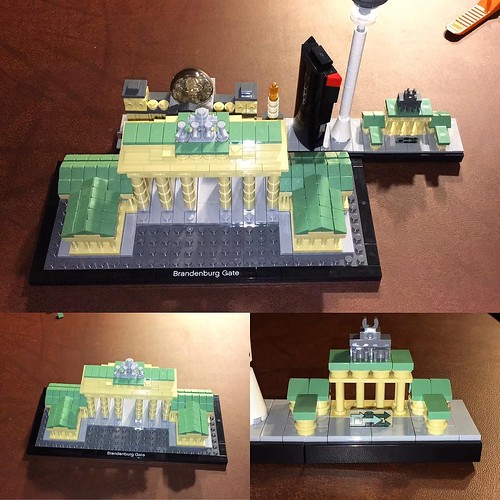
BRANDENBURG GATE
Commissioned by King Frederick William II of Prussia, the Brandenburg Gate was built as the grandest of a series of 18 city gates through which Berlin was once entered. Designed by architect Carl Gotthard Langhans and constructed between 1788 and 1791, the inspiration for the gate came from the entry hall of the Acropolis in Athens, Greece.
REICHSTAG
The Reichstag was originally completed in 1894, was almost completely destroyed during World War II and remained largely unused until the reunification of East and West Germany in 1990.
The renowned English architect Sir Norman Foster was given the task of renovating the building and chose to combine the original historical façade with modern architectural elements such as the spectacular glass dome.
I grew up with the piano. My mom had the upright piano she grew up with at her old house transported to our humble home when I was about 4 years old. She had it tuned, painted and fixed. As a kid, anyone who played the piano was a mark of prestige to me. I was in awe and listened quietly with my sister whenever my mom played. She plays classical tunes and modern songs that I heard in the radio at the time. She also plays by ear.
As an adult, I still think piano playing is a mark of prestige, whether you were classically trained or self-taught. I learned that "classical music" is the blanket term attributed to all songs before the 20th century. We had medieval, renaissance, baroque, classical and romanticism, and then 20th and 21st century style music. This is only western music. It does not include music from other regions of the world and their vast histories.
I learned to play the piano by ear as a kid. In high school, I learned how to read sheet music and just went from there. I'm not classically trained. I guess you could say I have the best of both worlds. I played the most in high school. Other interests, college, my job... I don't play as much anymore. I still play piano and guitar when I'm inspired.
It makes me think about what people did for entertainment in the past. They had sports. They went to the beach. They hung out with friends. Only when the sun is up. At night, they went home. Without electricity, lamps were a hot commodity. Plays and concerts were a luxury that only the upper-class could afford. I imagine the demand and competition lowered the prices, allowing everyone from all walks of life to experience concertos, orchestras and operas.
When it came to classical music, the audience had to use their imagination. The pamphlets had short summaries on the scene for part of the music. The music sets the scene, evoking emotions, engrossing the audience.
But seriously, I just needed an excuse to post this Saint-Saens' The Carnival of Animals. The Aquarium, Dying Swan, and the Finale are my favorite.
I. Introduction et marche royale du lion (Introduction and Royal March of the Lion) [0:00]
II. Poules et coqs (Hens and Roosters) [1:58]
III. Hémiones - animaux véloces (Wild Asses - quick animals) [2:42]
IV. Tortues (Tortoises) [3:22]
V. L'éléphant (The Elephant) [5:24]
VI. Kangourous (Kangaroos) [6:55]
VII. Aquarium [7:51]
VIII. Personnages à longues oreilles (Characters with Long Ears) [9:58]
IX. Le coucou au fond des bois (The Cuckoo in the Depths of the Woods) [10:35]
X. Volière (Aviary) [12:40]
XI. Pianistes (Pianists) [13:52]
XII. Fossiles (Fossils) [15:15]
XIII. Le cygne (The Swan) [16:41]
XIV. Finale [19:40]
This is a famous musical suite by French composer Camille Saint-Saëns (1835-1921), written while on vacation in Austria in 1886. It is scored for a chamber ensemble of flute/piccolo, clarinet (B flat and C), two pianos, glass harmonica, xylophone, two violins, viola, cello and double bass - in this recording, a full orchestral string section is used, and instead of the glass harmonica, there is a glockenspiel. Saint-Saëns believed that the work was too frivolous to publish during his lifetime, and for this reason, he only gave private performances to his close friends. He left a provision for it to be published posthumously, so the Carnival of the Animals only received a formal premiere one year after the composer's death.
Each of the fourteen movements depicts a different animal, often with plenty of humour and wit.
The first is the majestic march of the king of the animals - the lion - played by strings and pianos. The low, rumbling octave figure passed between the pianos is, of course, the lion's mighty roar.
The second movement (for pianos, clarinet, violins and violas) sees hens and roosters squawking while pecking at grains on the ground. The distinctive theme played by the piano is the rooster's "cock a doodle doo" call.
Next, Tibetan wild asses - portrayed by the two pianos in unison - gallop frenetically through the scene.
In contrast, the next movement for strings and piano depicts the slow, laborious movement of tortoises. This satirical section takes its main theme from the famous Galop infernal (or the can-can) in Offenbach's "Orpheus in the Underworld" - but it is played exceedingly slowly.
Then, the double bass and piano play a pompous, heavy-handed dance for the elephant. The thematic material derives from the scherzo in Mendelssohn's incidental music to "A Midsummer Night's Dream" and the ballet of the sylphs in Berlioz's "The Damnation of Faust".
The brief sixth movement sees two pianos play an abrupt, bouncy figure depicting hopping kangaroos.
Next, we find ourselves inside the shimmering water of an aquarium full of graceful fish. This movement is played by strings, pianos, flute, and glockenspiel. The pianos play a high rolling ostinato - one in decuplets and the other in sextuplets.
There follows a short movement for violins that sound like braying donkeys; perhaps Saint-Saëns meant the donkeys to represent asinine music critics.
Next, the pianos and an offstage clarinet play a slow movement where a cuckoo's call breaks the quiet of the woods.
The tenth movement for flute, piano and strings depicts an aviary abuzz with quiet activity, over which a tropical bird (the flute) sings a melody full of trills and scales.
Then, we see a very different type of animal - pianists (who, after all, are primates). The two pianists awkwardly practice scale patterns similar to those found in Hanon exercises. The whole time, they stumble over notes and break unison - evidently they need more practice.
Three loud unresolved chords lead into the next movement for strings, pianos, clarinet and xylophone, depicting fossils. The hollow sound of the xylophone evokes bones clacking together. The melody is from Saint-Saëns' "Danse macabre", the dance of skeletons. Other musical allusions in this movement include "Ah! vous dirai-je, Maman" (a.k.a. "Twinkle Twinkle Little Star"), "Partant pour la Syrie", the nursery rhymes "Au clair de la lune" and "J'ai du bon tabac", and a snippet from the aria "Una voce poco fa" from Rossini's "The Barber of Seville". The series of allusions is itself a musical joke, since these old tunes are cultural fossils.
The penultimate movement played by the cello and pianos shows the graceful gliding of a swan over a rippling lake. This very well-known section has become a stand-alone staple of the cello repertoire as well as the brief Fokine ballet "The Dying Swan".
Last comes the finale for the full ensemble, where themes from previous movements are reprised and combined to close the suite with excitement and panache.
Pianists: Vivian Troon, Roderick Elms
Conductor: Andrea Licata
Royal Philharmonic Orchestra
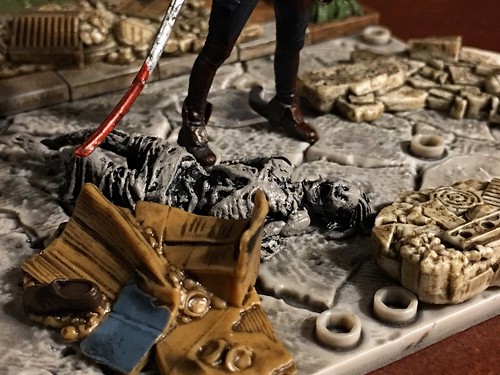
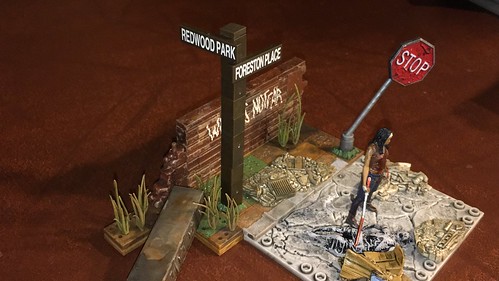
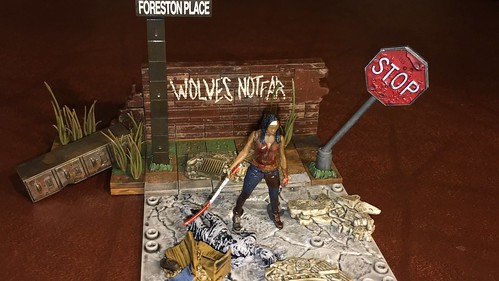
This set is based on a scene in Season 5, Episode 9 of The Walking Dead. Michonne standing in front of a wall with the words "Wolves Not Far" painted, bloody katana in full display.
This is one of three sets that LEGO debut in their Skyline series in the Architecture line. The Venice is the smallest of the three at 222 pieces. This is as miniaturized as you can get as far as LEGO bricks are concerned. They managed to fit 5 famous Venice landmarks.
Built on over 100 islands in a marshy lagoon at the edge of the Adriatic Sea, Venice has a skyline that rises from the water to create a unique architectural experience. There are no roadways or cars in the historic city; instead 177 canals crossed by over 400 bridges give access to innumerable narrow, mazelike alleys and squares.
THE BUILDINGS:
RIALTO BRIDGE
The Rialto Bridge (Ponte di Rialto) spans the Grand Canal at the heart of the historic city and was built between 1588 and 1591.
The single-span design with a 24 ft. (7.5 m) arch included three walkways: two along the outer edges and a wider central walkway between two rows of small shops. The entire structure was built on some 12,000 wooden pilings that still support the bridge over 400 years later.
BRIDGE OF SIGHS
Designed by Antonio Contino and completed in 1602, the Bridge of Sighs (Ponte dei Sospiri) is an enclosed bridge that passes over the Rio di Palazzo and connects the old city prison to the interrogation rooms in the Doge’s Palace.
The bridge’s romantic name is thought to refer to the sighs of convicts as they saw their last view of Venice before being taken to their prison cells.
ST. MARK’S CAMPANILE
The 323 ft. (98.6 m) tall St. Mark’s Campanile (Campanile di San Marco) stands alone in the corner of St. Mark’s Square, near the front entrance to the basilica. The brick structure is 39 ft. (12 m) wide on each side and 160 ft. (50 m) tall, upon which sits a belfry housing five bells.
ST. MARK’S BASILICA
St. Mark’s Basilica (Basilica di San Marco) is the most famous church in Venice and the best-known example of the city’s unique Italo-Byzantine architecture.
The current structure is thought to have been constructed between 1073 and 1093. The basilica is laid out in the design of a Greek cross and the tallest of the five domes reach 141 ft. (43 m) in height.
ST. THEODORE AND THE LION OF VENICE COLUMNS
Two granite columns stand guard at the entrance to St. Mark’s Square (Piazza di San Marco). Both columns are believed to have been erected in about 1268.
On top of the western column is a statue of St. Theodore, the first patron of the city. On the eastern column stands the winged Lion of Venice, the symbol of the second patron of the city, St. Mark.